Science Experiments You Can Try Today
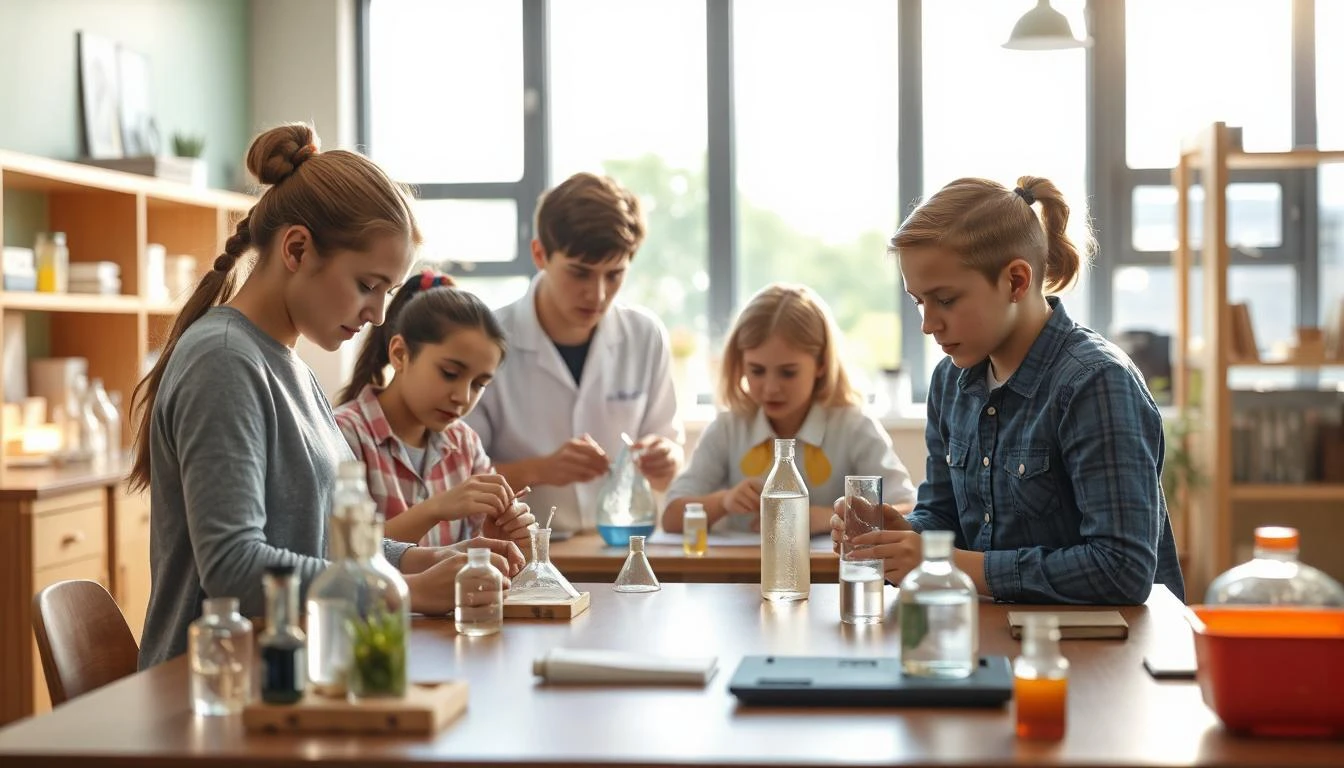
Science is all around us, yet many people never realize how fascinating everyday phenomena can become until they experience them firsthand. From bubbling chemical reactions to observing how plants respond to their environment, simple experiments can transform ordinary moments into valuable learning opportunities. More importantly, hands-on activities encourage curiosity, critical thinking, and a deeper appreciation for how the world works.
One of the most effective ways to develop scientific understanding is through STEM learning activities that allow learners to explore concepts through direct observation and experimentation. Whether conducted at home, in the classroom, or during family learning sessions, these activities make science more engaging, memorable, and accessible while helping participants connect theory with real-world applications.
Why Hands On Science Matters
Have you ever wondered why some lessons stay in your memory for years while others fade away almost instantly? The answer often lies in experience. Science becomes far more exciting when you can see reactions happen, observe changes with your own eyes, and discover answers through direct exploration. Instead of simply reading facts, you become part of the learning process, making every discovery feel more meaningful and memorable.
Today, many educators encourage STEM learning activities because they help transform abstract concepts into practical understanding. Whether you are a student, a parent, or simply curious about how things work, engaging in experiments allows you to connect scientific theories with real-world applications in a way that feels natural, enjoyable, and highly educational.
One of the reasons science continues to inspire people of all ages is its ability to spark curiosity. Through easy STEM activities, learners can explore fascinating concepts using simple materials while developing critical thinking, creativity, and problem-solving skills that extend far beyond the classroom.
Learning through Observation
Observation is the foundation of every scientific discovery. Before researchers can develop theories or reach conclusions, they must first pay close attention to patterns, behaviors, and unexpected outcomes. When conducting experiments, even small details can reveal important insights about how the world works.
This process teaches patience and attention to detail. As learners carefully watch changes occur, they begin asking deeper questions and seeking explanations supported by evidence rather than assumptions. These habits strengthen analytical thinking and encourage a more scientific mindset.
Building Curiosity with Experiments
Curiosity is often the starting point of innovation. Every experiment creates an opportunity to ask questions, test ideas, and explore possibilities that may not have obvious answers. The excitement of discovering something new encourages learners to continue exploring and expanding their knowledge.
Physicist Richard Feynman once emphasized that science is a way of trying not to fool yourself while searching for truth. His perspective highlights how experimentation encourages honest investigation and helps learners develop confidence in evidence-based reasoning.
Safe Experiment Practices
While experimentation is exciting, safety should always come first. Creating a safe learning environment allows participants to focus on discovery without unnecessary risks. Simple precautions such as following instructions carefully, using appropriate materials, and maintaining a clean workspace can make a significant difference.
When younger learners participate, adult supervision is highly recommended. Safe practices not only protect participants but also teach responsibility, an important part of scientific learning.
Easy Science Experiments at Home
The beauty of home-based science experiments is that they demonstrate powerful scientific principles using materials that are often already available. These activities prove that meaningful learning does not require a sophisticated laboratory or expensive equipment.
By exploring everyday phenomena through experimentation, learners can gain a deeper understanding of chemistry, physics, and biology while having fun in the process.
Creating a Simple Volcano Reaction
One of the most popular science experiments involves creating a miniature volcano using baking soda and vinegar. Although simple, this activity provides a clear demonstration of an acid-base reaction.
When vinegar is added to baking soda, carbon dioxide gas forms rapidly, creating the familiar bubbling eruption. This visual reaction helps learners understand how chemical changes occur and introduces foundational concepts in chemistry.
The experiment also encourages prediction and observation, both of which are essential components of the scientific method.
Exploring Water Surface Tension
Water often appears simple, yet it possesses remarkable properties that continue to fascinate scientists. Surface tension occurs because water molecules attract one another, creating a thin layer across the surface.
A classic experiment involves carefully placing a paper clip on water. Despite being heavier than water, the clip can float when positioned gently. Adding a drop of dish soap breaks the surface tension, causing the paper clip to sink.
This experiment demonstrates molecular interactions while helping learners understand scientific principles that influence weather systems, biological processes, and countless natural phenomena.
Testing Plant Growth Conditions
Plants provide an excellent opportunity to explore biological science through long-term observation. By growing identical plants under different environmental conditions, learners can investigate how factors such as sunlight, water, and temperature affect development.
For example, one plant may receive full sunlight while another remains in partial shade. Over time, differences in growth become visible, providing valuable evidence about the role environmental conditions play in plant health.
These observations introduce concepts related to photosynthesis, ecosystems, and environmental science while reinforcing the importance of controlled experimentation.
Understanding the Science Behind Results
Performing an experiment is only the beginning. The real value of scientific investigation comes from understanding why certain results occur and how evidence supports conclusions.
Learning how to analyze data, identify patterns, and interpret findings helps transform simple activities into meaningful educational experiences.
Recording Observations Accurately
Accurate observation records are essential in science. Even the most exciting experiment can lose value if important details are forgotten or documented incorrectly.
Scientists rely on detailed notes, photographs, measurements, and data logs to ensure their findings remain reliable. Developing these habits helps learners appreciate the importance of accuracy and consistency in scientific research.
Identifying Variables in Experiments
Variables play a critical role in determining experimental outcomes. Understanding the difference between independent, dependent, and controlled variables helps learners design more reliable investigations.
When only one factor changes at a time, it becomes easier to identify the true cause of a result. This approach strengthens logical reasoning and improves the overall quality of scientific inquiry.
Drawing Conclusions from Data
Scientific conclusions should always be supported by evidence. After collecting observations and analyzing results, learners can evaluate whether their findings support the original hypothesis.
Drawing conclusions encourages critical thinking and teaches participants to rely on facts rather than assumptions. This skill remains valuable not only in science but also in everyday decision-making.
As educator and scientist Carl Sagan famously noted, science is more than a body of knowledge, it is a way of thinking. His observation continues to remind learners that scientific inquiry is fundamentally about understanding the world through evidence and reason.
Try These Science Experiments and Expand Your Knowledge Today
Every experiment begins with a simple question and often leads to discoveries that are far more interesting than expected. Whether you are observing a chemical reaction, exploring the properties of water, or monitoring plant growth, each activity offers an opportunity to learn something new.
The most rewarding part of scientific exploration is realizing that knowledge grows through curiosity, observation, and persistence. The experiments discussed throughout this article demonstrate how accessible science can be when approached with an open mind and a willingness to explore.
By making experimentation a regular habit, you can strengthen critical thinking skills, develop a deeper appreciation for the natural world, and uncover fascinating insights hidden within everyday experiences. “The journey of discovery does not require advanced equipment, it simply begins with curiosity.”
Ready to start exploring? Try one of these experiments today and see what surprising discoveries await you.